
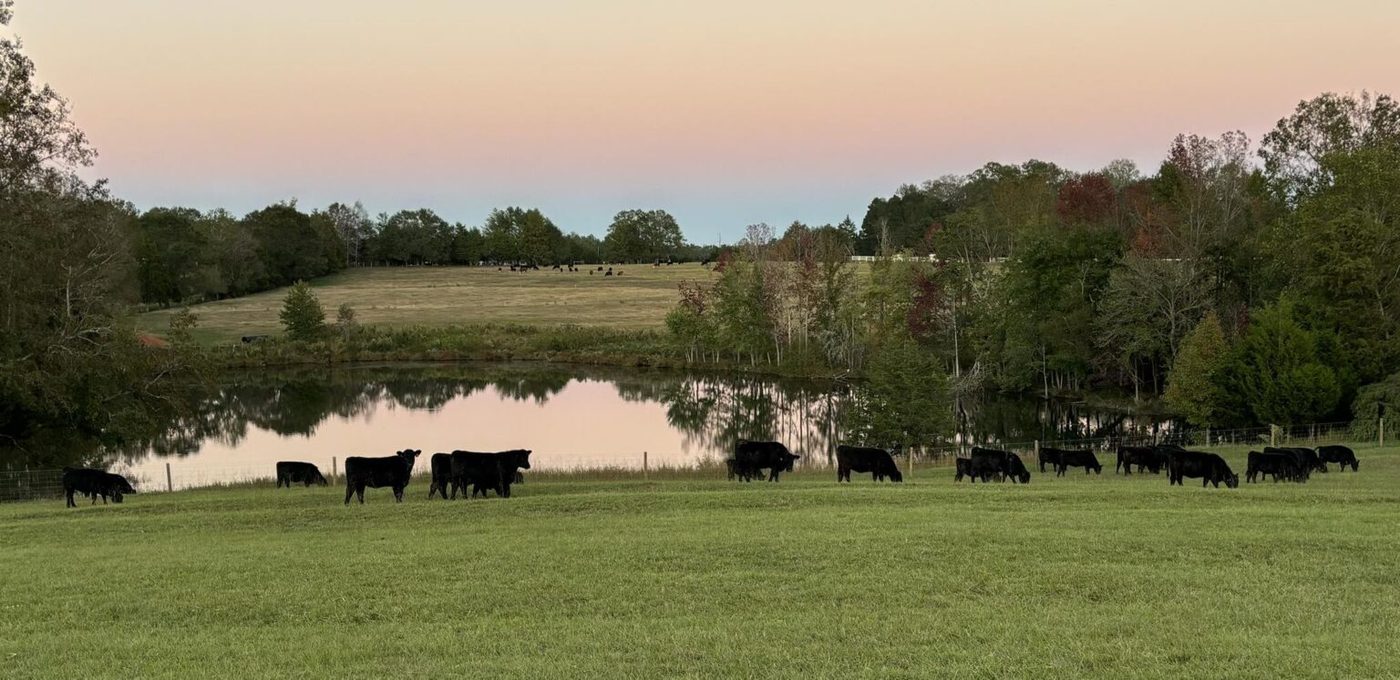
Laurens County is two counties pretending to be one. The top end, where Gray Court and Owings meet the Fountain Inn line, is already southern Greenville County in everything but the tax bill: sewer taps, national builders, and a subdivision pipeline that turned a farm community into a growth belt in about five years. The rest of it, from Laurens and Clinton south to Lake Greenwood, is still hay fields, planted pine, cattle and Presbyterian College. If you own land here, which half you're in decides everything.
What the land is like here
Laurens County is classic Piedmont farm country, and more of it is still farmed than in any county closer to Greenville. Rolling pasture and hay ground, big planted-pine tracts, hardwood bottoms along the Enoree, the Reedy and the Saluda, and the Little River running down through the middle. The soils are the usual Upstate clay, better on the river terraces and creek bottoms, tighter on the ridges. It's gentler and flatter than the mountain counties, and more of it is workable.
The northern end, north of Laurens and up through Gray Court and Owings toward Fountain Inn, is where the county touches the Greenville metro, and it looks it: Highway 14, Highway 101, the I-385 exits, and subdivision entrances where the cattle gates used to be. The southern end drops toward Lake Greenwood, the reservoir on the Saluda that Laurens County shares with Greenwood County, with Waterloo and Cross Hill as the lake towns.
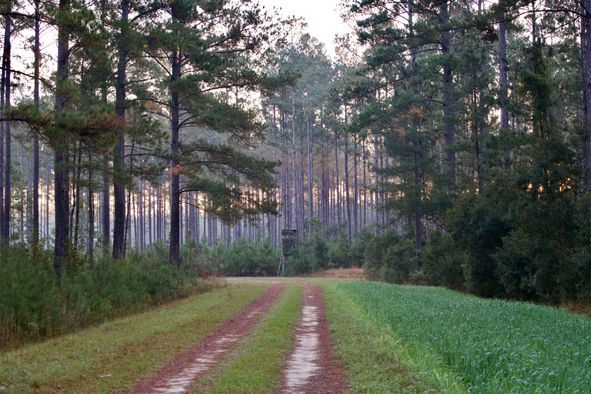
Laurens County has no county-wide zoning, but in 2025 it adopted a new comprehensive plan and tightened its subdivision regulations, raising the minimum lot size in new subdivisions after farmers and ranchers pushed back on the northern growth belt. High-density builder interest cooled. Larger-lot demand didn't. A Zoning Task Force is now studying whether real land-use restrictions come next.
No zoning, new rules
Unincorporated Laurens County doesn't have use-based zoning districts. What it has is a comprehensive plan, subdivision regulations and land development standards, and both the plan and the regulations were rewritten in 2025 in response to the northern growth. The headline change was lot size: new subdivisions now have to carry larger lots than the ones that filled the Gray Court corridor over the previous few years. The county has also formed a Zoning Task Force, born out of a Freedom of Information Act settlement, to decide whether Laurens County should adopt actual zoning. Inside the cities of Laurens, Clinton, Gray Court, Cross Hill and Fountain Inn's Laurens County side, city zoning applies.
What that means for a seller
- Lot yield went down, not away. A tract on the growth belt still trades on lots, just fewer of them per acre than in 2022. Price to the new math, not the old comps.
- Estate-lot demand went up. Larger required lots suit the buyer who wanted two acres anyway. Mid-size tracts near the north end are in a good spot.
- The task force is the wildcard. If Laurens County adopts zoning, what your parcel is allowed to become could change. If you're holding to sell in a few years, watch it.
Sewer, septic and the perc test
Sewer is the story in Laurens County, and it's a northern story. The Laurens County Water and Sewer Commission (LCWSC) serves the growth belt, with a ReWa trunk line carrying northern flows toward Greenville's treatment system and a surcharge on those customers to pay for it. LCWSC has planned roughly 2,700 water taps for the subdivisions it's tracking, had installed about 785 by early 2025, and needs around 450 a year to sustain the system; it has floated building its own small treatment plant for the north end. That's a utility planning for growth, and it tells you where the growth is.
Off those lines, which is most of the county, it's septic. The lot count on a septic parcel is set by the South Carolina Department of Environmental Services' site evaluation, not by acreage; the agency took over from DHEC in 2024. Just over half an acre per lot is the practical floor and tight clay pushes it up. Some of the tracked subdivisions on the north end are septic-served, which tells you the soil there can carry it. A soil evaluation before you list or buy is the cheapest insurance in land.
In Laurens County, two questions before price: is it north of Laurens, and is it within reach of an LCWSC main. Yes to both and you're in a builder market. No to either and you're in farm country, which is its own good market with its own buyers.
Where the growth is heading
Laurens County's growth is Greenville's growth, arriving from the north. Here's how we read it:
- North: Gray Court, Owings, Highway 14 and the Fountain Inn line. The builder market. Wells Creek, Foxbank, Bridgeway and a half-dozen more communities are in the pipeline, and the LCWSC tap count is the scoreboard. Sewered ground with frontage here trades like southern Greenville County.
- The I-385 corridor toward Laurens. The next fill-in. Interstate access, cheaper land, and the county seat at the end of it.
- Clinton and I-26. Presbyterian College, the interstate interchange and steady, slower growth. Industrial and distribution demand near the exits.
- South: Waterloo, Cross Hill and Lake Greenwood. Lake and lifestyle demand. Waterfront is its own market; inland tracts near the lake ride along.
- Everywhere else: Mountville, Hickory Tavern, Ora, Joanna. Still farm and timber country, still priced like it, and the place patient landowners and patient buyers meet.
What acreage is actually worth here
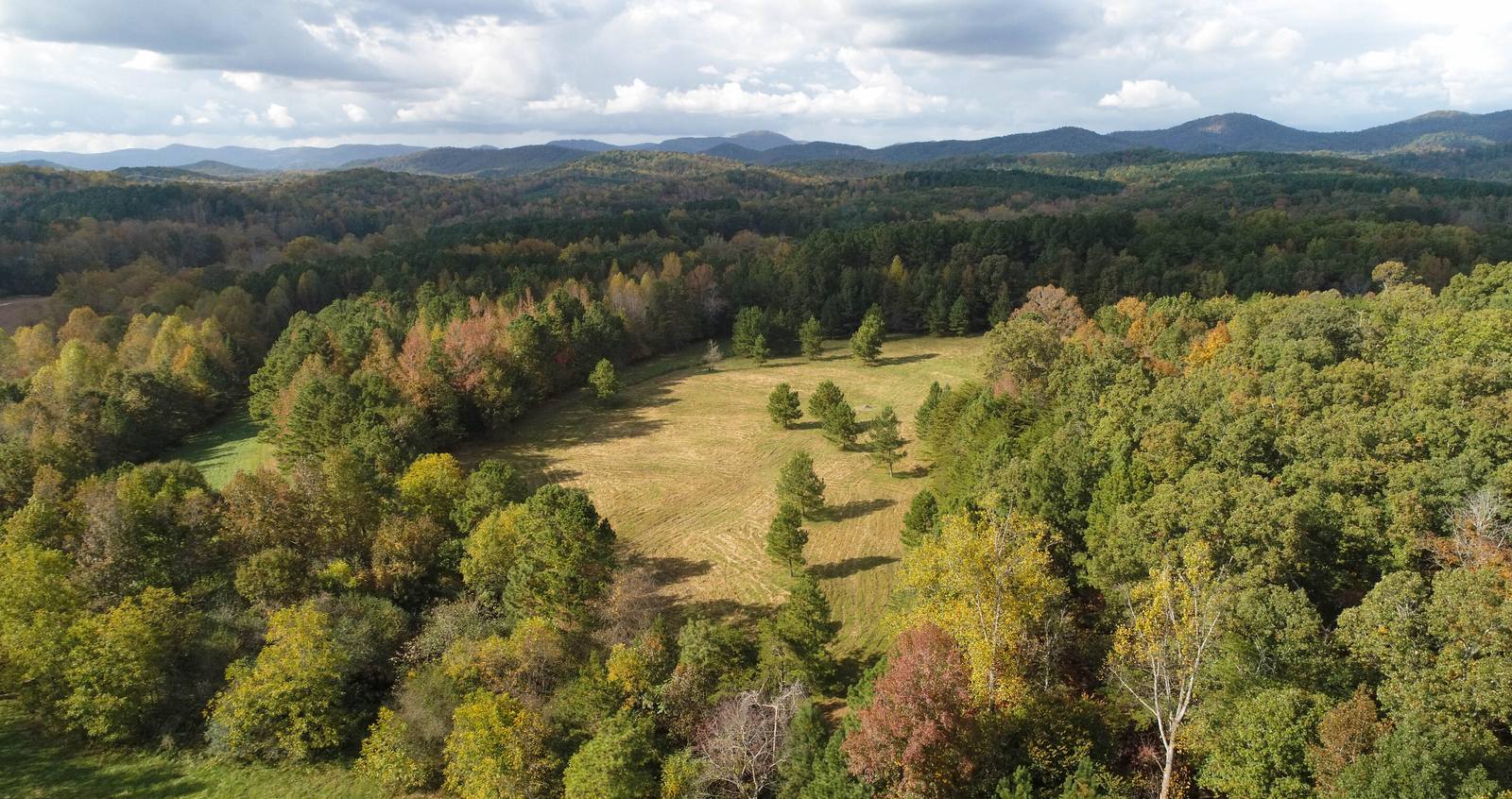
A per-acre average for Laurens County puts a Lake Greenwood lot, a Mountville cattle farm and a Gray Court subdivision site in the same number and tells you nothing about any of them. What we can tell you is the shape of the market as we see it walking it in 2026:
Where your land falls between those depends on which end of the county it's in, LCWSC reach, perc, frontage, slope, floodplain, restrictions, timber and which buyer pool it truly belongs to. That's the underwriting we do before we list.
Selling land in Laurens County
Most land listings here get a per-acre comp, six phone photos and a sign at the road. Ours don't, because we do the buyer's homework first:
- We walk it. Fence lines, creek bottoms, old farm roads, the timber stand nobody cruised. The things a desk agent never sees are where the value hides.
- We underwrite it. Subdivision rules under the 2025 regulations, LCWSC reach, soils, floodplain, restrictions, and what a builder's lot yield would be under the new lot sizes. The same file the builder would build.
- We show it. Drone film, mapping and a story-first listing. A 200-acre farm deserves better than a windshield photo.
- We match it. Builders and investors we already talk to for the north-end ground; farmers, homesteaders, hunters and lake buyers for the land that should stay land.
Buying land in Laurens County
Before you close on acreage here, know: whether the parcel is inside a city's zoning or in the unzoned county; what the 2025 subdivision regulations allow on it; how far the nearest LCWSC main is and whether it's on the ReWa surcharge side; what a soil evaluation says; whether the road frontage and the deeded access are the same thing; what's in the floodplain along the Enoree, Reedy, Saluda or Little River; what easements, covenants or timber deeds ride with the title; and, on Lake Greenwood, exactly what the shoreline rules allow. We check all of it, including on off-market parcels we source for builders and investors.
Towns and communities we cover
Gray Court, Owings, Laurens, Clinton, Fountain Inn (Laurens County side), Waterloo, Cross Hill, Mountville, Hickory Tavern, Ora, Joanna, Kinards and the rest of the county. Town-level notes are on the way; the chat button already knows all of them.