
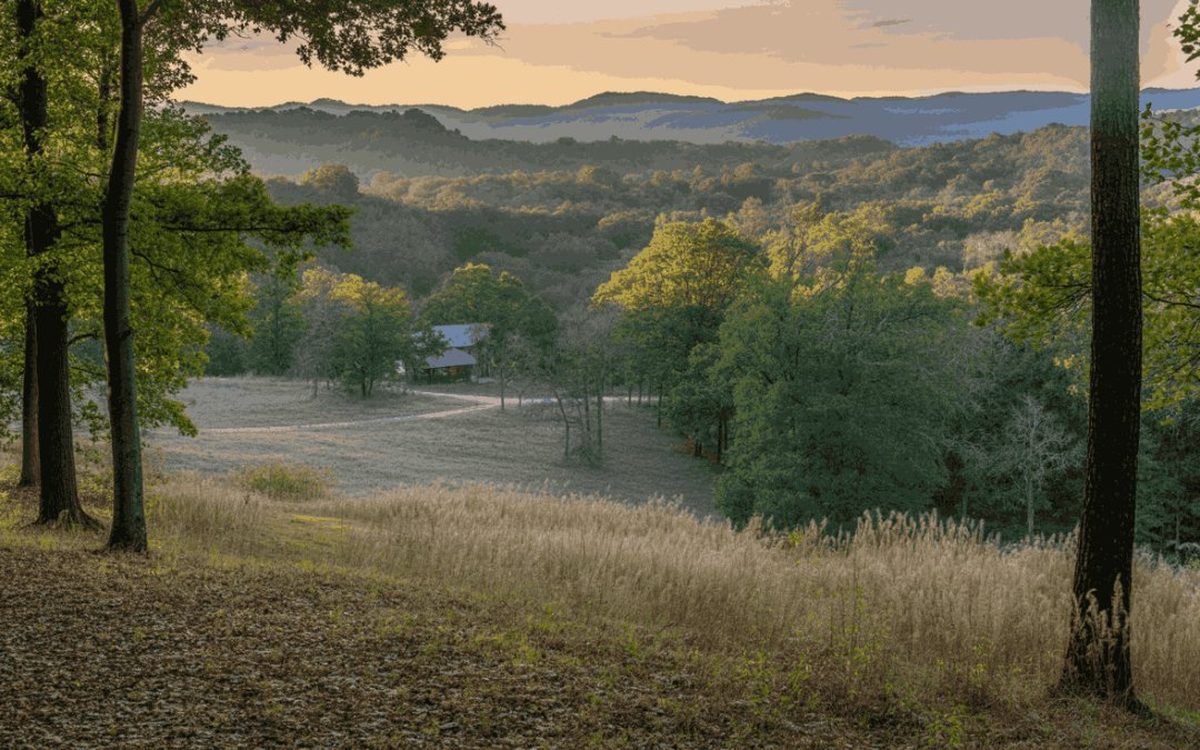
Pickens County is the prettiest county in the Upstate and everybody knows it, which is the whole problem. Table Rock and Sassafras Mountain on the north end, Keowee and Jocassee on the west, Clemson on the southwest corner, and Easley on the east sliding into the Greenville metro. For most of its history the county let the land sort itself out with almost no rules. In 2024 that ended. If you own acreage here, the first question is now which of five character areas you're in, and the answer decides what the ground can become.
What the land is like here
The northern third is real mountains. The Blue Ridge Escarpment runs through Table Rock, Caesars Head's western flank and Sassafras Mountain, the highest point in the state, and the ground north of Highway 11 is steep, wooded and creek-cut, with the Eastatoe and Oolenoy valleys tucked between the ridges. Soils are thin and rocky, building sites are earned, and the views are the asset.
The middle of the county, from Pickens and Dacusville down through Liberty and Six Mile, is foothills: rolling pasture and hardwood, old family farms, lake-adjacent ground toward Keowee. The southern edge along Highway 123 and Highway 93, Easley to Clemson, is where the county stops being rural. Easley has become an eastern suburb of the Greenville metro in everything but the county line, and Clemson's growth spills into Central and the surrounding land.
Then there's the water. Lake Keowee is a Duke Energy reservoir with some of the most valuable shoreline in the Carolinas. Lake Jocassee above it is almost entirely protected. Hartwell touches the southwest corner. Lake ground is its own market.
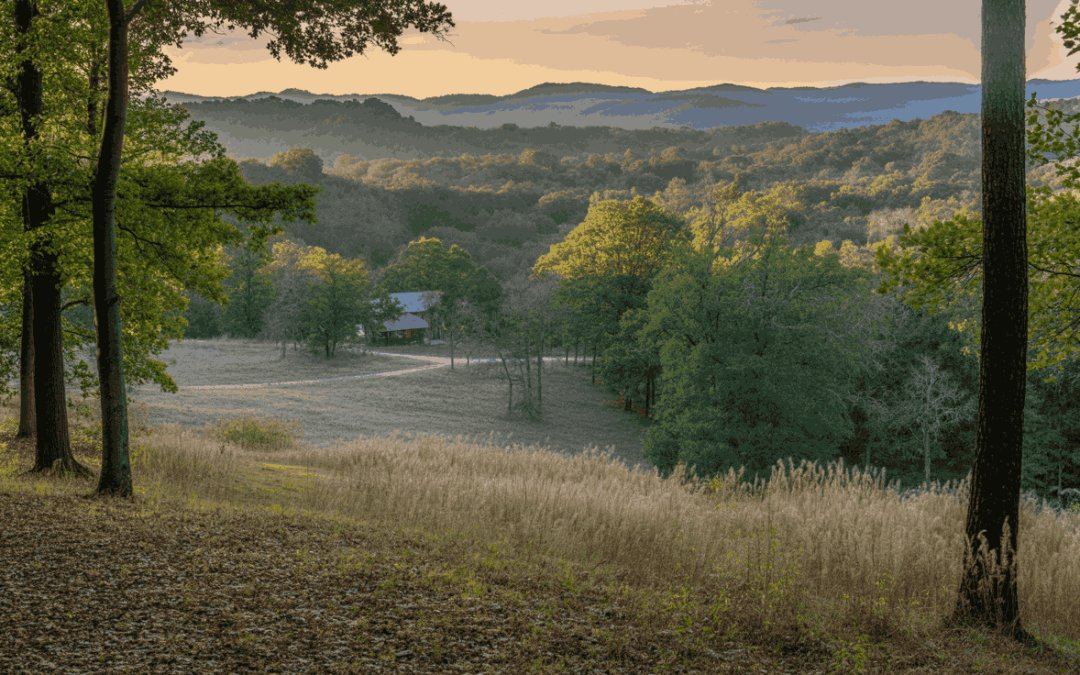
Since 2024, unincorporated Pickens County is divided into five character areas, each with its own minimum lot size and open-space rule for new subdivisions. North of Highway 11 it's two-acre lots and half the tract left open; on a gateway corridor it's eighth-acre lots. Same county, sixteen-fold difference in lot yield. We check the map before we talk numbers.
The five character areas
Pickens County spent decades as one of the last largely unzoned counties in the Upstate, and it showed: subdivisions on mountain ridges, no buffers, no say. In November 2023 County Council approved a five-zone Development Areas map, and in April 2024 it amended the Unified Development Standards Ordinance (UDSO) to enforce it. It isn't traditional use-based zoning, but for a landowner it works like one. From least dense to most:
- Appalachian Heritage. North of Highway 11 and a mile south of it. Two-acre minimum lots, 50% open space in new subdivisions, viewshed analysis required. Estate, conservation and recreation country by design.
- Agricultural Heritage. The foothills farm belt. One-acre lots, 40-foot setbacks, 40% open space, viewshed analysis and dark-sky lighting.
- Natural Heritage. Half-acre lots, 40% open space, the same viewshed and lighting rules.
- Community Center. Around the towns. Quarter-acre lots, 30% open space, multifamily up to three stories.
- Gateway Corridor. The main highways into the county. Eighth-acre lots, 20% open space, mixed use up to five stories.
Every area requires a 50-foot buffer from water and limits land disturbance on a lot. Inside the cities of Easley, Pickens, Clemson, Central, Liberty, Norris and Six Mile, city zoning applies. The council called the map a "living, breathing document," which means it will keep moving; if you're holding land near a boundary between two areas, that's worth watching.
What that means for a seller
- North of 11, stop thinking lot yield. The buyer is a family, a hunter or a conservation-minded owner paying for the view and the privacy the rules now protect.
- In the Agricultural and Natural Heritage belt, open space is the math. A 40-acre tract at one-acre lots and 40% open space doesn't yield 40 lots; it yields closer to 20. Price accordingly.
- On a gateway corridor or near a town, the county finally wants density. Sewered ground here is where the builders are.
Sewer, septic and the perc test
Sewer in Pickens County follows the towns. Easley Combined Utilities covers Easley and reaches out along its corridors; Clemson, Central and the city of Pickens run their own systems; the rest of the county is septic. Where a gravity main is close, a parcel is priced on lot yield. Where it isn't, it's priced on perc.
Septic permits come from the South Carolina Department of Environmental Services, the agency that took over from DHEC in 2024, and their site evaluation sets the lot count regardless of what the character area allows. Mountain soils are shallow, rocky and steep, and plenty of beautiful ground up north won't take a conventional system at all. Down in the foothills and along the creek terraces, it percs about like the rest of the Upstate: sometimes. A soil evaluation before you list or buy is the cheapest insurance in land.
In Pickens County, ask three questions before you ask about price: which character area, how far to sewer, and does it touch a lake. Any one of those can move the number more than the acreage does.
Where the growth is heading
Pickens County grows for two reasons that have nothing to do with each other: Greenville's overflow arriving through Easley, and people from everywhere wanting a mountain or a lake. Here's how we read it:
- East: Easley, Highway 123 and Highway 153. The builder market. Easley shares a border with Powdersville and the Greenville metro, and sewered ground with frontage here trades like the Greenville County line it sits on.
- Southwest: Clemson, Central and Highway 93. University pressure. Student housing, faculty and staff, and the retirees who follow a college town. Any sewered parcel within a few miles of campus is in play.
- Between them: Liberty, Norris and the 123 corridor. The next fill-in as Easley and Clemson grow toward each other.
- West: Keowee and Six Mile. Lake demand. Waterfront and lake-view lots at prices that have little to do with the rest of the county.
- North: Pickens, Dacusville, Pumpkintown and everything above Highway 11. Lifestyle demand, now protected by the two-acre rule. Smaller tracts, higher per-acre numbers, buyers who want the land to stay land.
What acreage is actually worth here
A per-acre average for Pickens County puts a Keowee lake lot, a Sassafras Mountain hunting tract and an Easley subdivision site in the same number and tells you nothing about any of them. What we can tell you is the shape of the market as we see it walking it in 2026:
Where your land falls between those depends on character area, sewer distance, perc, slope, water frontage, floodplain, restrictions, timber and which buyer pool it truly belongs to. That's the underwriting we do before we list.
Selling land in Pickens County
Most land listings here get a per-acre comp, six phone photos and a sign at the road. Ours don't, because we do the buyer's homework first:
- We walk it. Building sites, spring heads, the old roadbed, the ridge with the view nobody photographed. On mountain land that's where all the value is.
- We underwrite it. Character area, open-space math, sewer distance, soils, slope, water buffers, floodplain, restrictions. The same file a builder or a conservation buyer would build.
- We show it. Drone film, mapping and a story-first listing. Pickens County land photographs better than anywhere in the state; we make sure yours does.
- We match it. Builders and investors we already talk to for the Easley and Clemson ground; families, hunters, lake buyers and conservation-minded owners for the land that should stay land.
Buying land in Pickens County
Before you close on acreage here, know: which character area the parcel is in and what lot size and open space that dictates; how far the nearest sewer main is; what a soil evaluation says, especially on mountain ground; how steep the buildable area really is; what's inside the 50-foot water buffer and the floodplain; whether the road frontage and the deeded access are the same thing; what easements, covenants or timber deeds ride with the title; and, on Keowee, exactly what Duke's shoreline plan allows. We check all of it, including on off-market parcels we source for builders and investors.
Towns and communities we cover
Easley, Pickens, Clemson, Central, Liberty, Norris, Six Mile, Dacusville, Pumpkintown, Sunset, Cleveland (the Pickens side), Eastatoe and the rest of the county. Town-level notes are on the way; the chat button already knows all of them.