
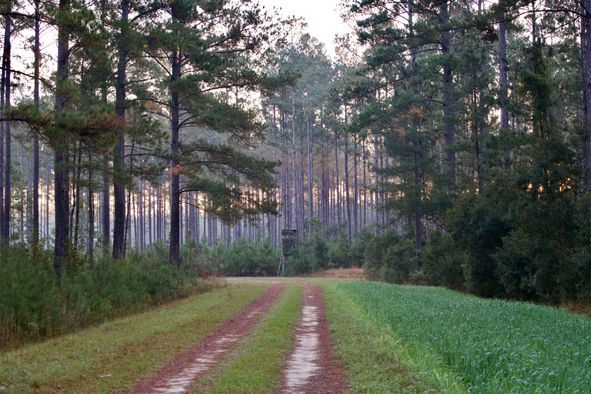
Spartanburg County is the Upstate's working county. Two interstates cross it, a third loops the city, BMW sits on its western edge, and the inland port at Greer ships what the plant builds. The land that used to grow peaches and cotton along the I-85 spine now grows subdivisions, and it's happening faster here than anywhere else in the state. Up north, past Inman and Landrum, the foothills still look like the foothills. Knowing which end of the county your parcel is on is half the underwriting.
What the land is like here
Most of Spartanburg County is gently rolling Piedmont: red clay, old cotton and peach ground gone to pasture and planted pine, creek bottoms along the Tyger, the Enoree and the Pacolet. It's easier country than Greenville County's mountains. More of it is flat enough to farm, grade and drain, and it percs about as well as any clay in the Upstate does, which is to say sometimes.
The northern edge is different. From Campobello and Landrum up to the North Carolina line, the ground lifts into the Blue Ridge foothills. That's horse country and view country, with the Tryon and Landrum equestrian scene pulling a buyer who wants forty fenced acres and a long driveway, not a lot count. Lakes Bowen and Blalock, the Spartanburg Water reservoirs north of the city, carry their own premium for anything with frontage or a view.
South and east, toward Woodruff, Enoree, Pacolet and Cowpens, the county gets quieter and cheaper, and that's exactly where the pressure is arriving next.

Unincorporated Spartanburg County doesn't have traditional zoning. It has performance zoning: the county doesn't tell you what a parcel can be used for, it tells you how any use has to be built. That makes the county friendlier to a landowner than most of its neighbors, and it makes road frontage and sewer the two things that actually set the value.
Performance zoning, not districts
Outside the cities, Spartanburg County runs on a Unified Land Management Ordinance (ULMO) and a Performance Zoning Ordinance. There are no use-based districts saying "this is residential, that is agricultural." Instead, whatever you propose has to meet development standards that scale with its intensity: setbacks, buffer yards, landscaping, parking, stormwater, road frontage. A single house on twenty acres clears a low bar. A 200-lot subdivision clears a high one, and buffers against the neighbors.
The practical effect for a seller is that the county rarely says "no" outright; it says "here's what it costs to do that here." For a buyer it means the neighbor's parcel can become something you didn't expect, and the buffer yard rules are your protection, not a zoning map. Inside the cities of Spartanburg, Greer, Woodruff, Duncan, Lyman, Wellford, Landrum, Inman, Chesnee, Cowpens and Pacolet, city zoning takes over, and several of them annex aggressively along the growth roads.
Road frontage is the lever
The county's frontage rule is simple and it decides everything about a frontage split: 100 feet per lot on an arterial, collector or local through-road, 75 feet on other roads, 50 feet where there's a dedicated right-of-way. A parcel with 600 feet on a county road is a very different asset from one with 150 feet and a flag lot, even at the same acreage. We measure it before we quote a number.
Sewer, septic and the perc test
Sewer in Spartanburg County is a patchwork, and the map is the market. The Spartanburg Sanitary Sewer District covers the city and the corridors radiating out of it; Greer CPW runs the west side around Greer; Lyman, Woodruff and ReWa each hold a piece. Where a gravity main is close, a parcel is priced on lot yield. Where it isn't, the parcel is priced on perc.
Septic permits come from the South Carolina Department of Environmental Services, the agency that took over from DHEC in 2024, and their site evaluation, not the acreage, sets the lot count. Half an acre is the floor; the county's heavier clay routinely pushes it to an acre or more per system. On a big tract that's the difference between a builder deal and an estate-lot deal, and it's knowable for a few thousand dollars before you list.
In Spartanburg County, ask two questions before you ask about price: how much county-road frontage, and how far to the nearest sewer main. The answers put the parcel in its bracket. Everything else is refinement.
Where the growth is heading
The latest Census estimates (July 2024 to July 2025) made Woodruff the fastest-growing city in South Carolina at 16.8% in a single year, with Greer, which straddles the Greenville line, right behind at 7.3%. That's not a blip; it's the I-85 corridor filling in from both ends. Here's how we read it:
- West: Highway 290 through Duncan, Moore and Reidville. The main event. Sewered, flat, minutes from BMW and I-85, and already thick with national-builder communities. Any workable tract with frontage here trades on lot yield.
- North: Boiling Springs and Highway 9. The county's other established growth belt, pushing out toward Inman and Chesnee along the reservoirs. Sewer reach is the question on every parcel.
- South: Woodruff, Highway 101 and Highway 221. Cheaper ground, a fast-growing town, and the next place the builders go when 290 gets scarce. Timing matters here; the price gap to Duncan is closing.
- East: Greer, the inland port and the BMW orbit. Industrial demand as much as residential: warehouse and logistics users want big flat tracts near the interstate and pay accordingly.
- Far north: Landrum and Campobello. Not a builder market. Equestrian, view and estate buyers who want the land to stay the way it is, and pay a premium for it.
What acreage is actually worth here
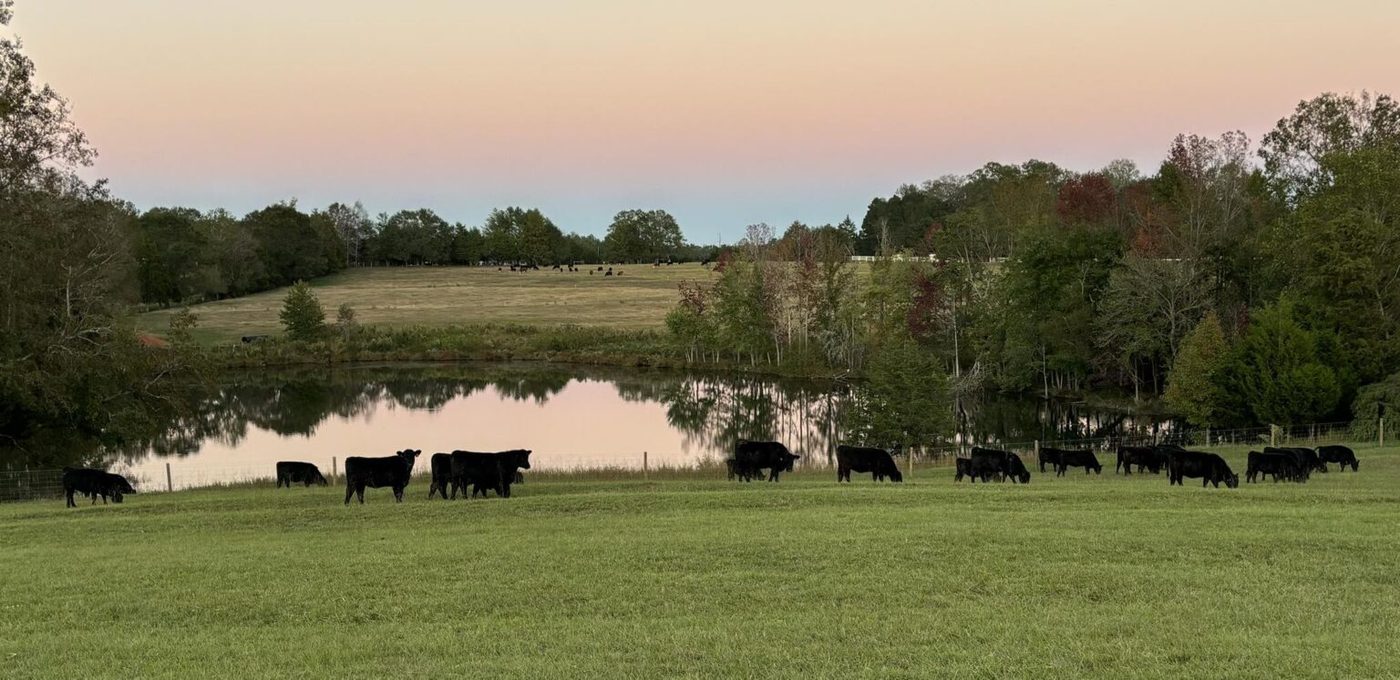
A per-acre average for Spartanburg County mixes a Landrum horse farm with a Duncan subdivision site and tells you nothing about your parcel. What we can tell you is the shape of the market as we see it walking it in 2026:
Where your land falls between those is a function of frontage, sewer distance, perc, slope, floodplain, restrictions, timber value and which buyer pool it truly belongs to. That's the underwriting we do before we list.
Selling land in Spartanburg County
Most land listings here get a per-acre comp, six phone photos and a sign at the road. Ours don't, because we do the buyer's homework first:
- We walk it. Frontage, fence lines, creek bottoms, old roadbeds, where the clay turns to something that percs.
- We underwrite it. Frontage math, sewer distance, soils, floodplain, restrictions, ULMO standards for what a buyer would want to do. The same file a builder builds.
- We show it. Drone film, mapping and a story-first listing, so a Reidville tract looks like the opportunity it is.
- We match it. Builders and investors we already talk to for corridor ground; horse people, homesteaders and hunters for the land that should stay land.
Buying land in Spartanburg County
Before you close on acreage here, know: how much county-road frontage it has and what that yields; how far the nearest sewer main is and whose district it's in; what a soil evaluation says; what's in the floodplain along the Tyger, Enoree or Pacolet; whether the deeded access matches the road frontage; what easements, covenants or timber deeds ride with the title; and what the neighboring parcels are allowed to become under performance zoning. We check all of it, including on off-market tracts we source for builders and investors.
Towns and communities we cover
Woodruff, Duncan, Moore, Reidville, Lyman, Wellford, Boiling Springs, Inman, Chesnee, Landrum, Campobello, Greer, Cowpens, Pacolet, Enoree, Roebuck and the rest of the county. Town-level notes are on the way; the chat button already knows all of them.